Blog Digital marketing and SEO
SEO for transfer companies: showing up in airport and route searches
The steps to make your transfer website visible in airport and area searches: route pages, guide content and internal links, technical foundations, the Google Business Profile and pre-season ads.
SEO for a transfer company aims to put your site in front of guests when they search for phrases such as “airport transfer” or “airport to hotel transfer”. These searches are usually made before a holiday and with the intention to book, so every search met with the right page is a sales opportunity.
In this guide we go through an SEO plan for a transfer website step by step: route pages, internal links, technical foundations, the Google Business Profile, pre-season ads and measurement. We take the example routes from Antalya Airport and its surroundings, but the same structure works for any airport and area. You can find answers to questions about the site’s overall structure in our tourism website guide.
How do people search for a transfer?
A guest looking for a transfer usually combines a starting point, a destination and a type of service. Search patterns mostly fall into these groups:
- Airport searches: General searches that contain only the starting point, such as “Antalya Airport transfer”.
- Route searches: Searches that contain both points, such as “Antalya Airport to Belek transfer”.
- Service searches: Searches focused on the vehicle and type of service, such as “VIP transfer”, “private transfer” or “minibus transfer”.
- Searches in other languages: The same intent, searched in the guest’s own language.
Route searches are more specific and closer to a booking; the guest making them knows where they are going and is often looking for a price. So do not tie your goal on Google to a single general keyword. Every route and every language is a separate visibility opportunity.
Route pages: the backbone of transfer company SEO
On a transfer website, route pages are the foundation of search visibility. For example, a separate page for each route for guests travelling from Antalya Airport to Belek, Side, Kemer and Alanya lets you meet every search directly with the relevant answer. Keep the address structure simple too; a readable address such as /transfer/antalya-airport-belek tells both the guest and the search engine what the page is about.
A route page should include:
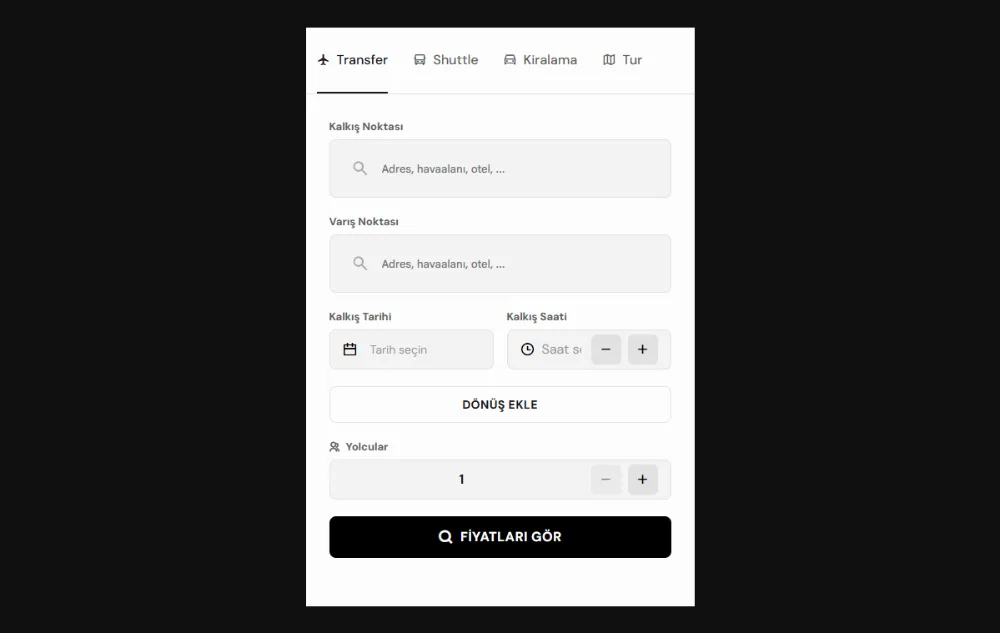
- At the top of the page, a booking form with the pickup and drop-off points already filled in
- The vehicles and prices suited to the route, or clear information on how the price is calculated
- The meeting point at the airport and how the driver will find the guest
- The main hotel areas at the destination and practical information about the journey
- Frequently asked questions specific to that route
The title tag and description of every route page should be specific to that route too. For example, you can use the phrase “Antalya Airport to Belek Transfer” in the title with your company name, and sum up the vehicle options, the meet and greet service and online booking in one sentence in the description.
Do not multiply route pages by copying the same text and changing only the place name. Search engines see pages that copy each other as low value, and guests find no difference between them. Add real information about the area to each page, along with the questions guests ask on that route and your team’s experience.
Guides and internal links: a bay guide example
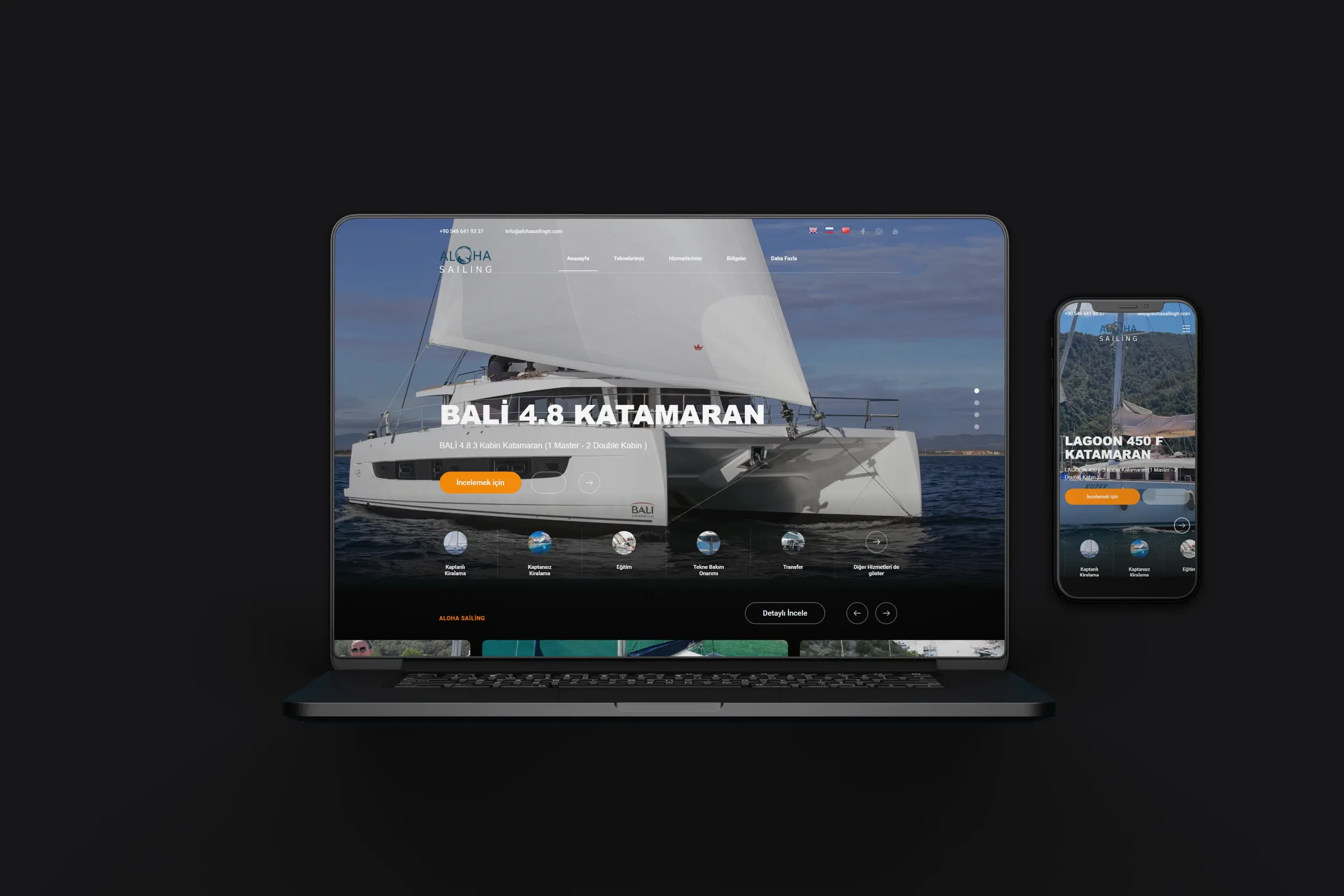
Do not leave route pages on their own; connect them with informative guide content. We designed this structure for Aloha Sailing (Aloha Yachting on our project page), a Fethiye-based boutique yacht charter brand. The route guides on the site describe the blue cruise from Göcek to Tersane Island, Cleopatra Bay, Bedri Rahmi Bay and the Yassıca Islands, stop by stop.
We prepared each guide with its own focus keyword, title and description and linked it to the boat pages, so guests can go straight from the route they read about to a booking. At Aloha Sailing, an airport transfer is also one of the extra services guests can choose during booking. You can find the details of the Aloha Sailing project on our project page.
For a transfer company, the same logic works like this:
- Write an area guide: a page about what guests coming to Belek, Side or Kemer want to know.
- Link from the guide to the route pages for that area.
- Link back from the route pages to the guide and to other related routes.
- In every link, use link text that describes the topic of the target page instead of a generic phrase such as “click here”.
This structure tells the search engine which page is an authority on which topic. For guests, it creates a natural path that makes it easy to book their transfer while they read the guide.
Speed, mobile friendliness and language markup
Guests looking for a transfer are usually on their phone; at the airport, at the hotel or on the road, they expect a quick answer. If your page loads slowly or the form is hard to fill in on mobile, even a good ranking will not turn into a booking. On the technical side, check these foundations:
- Pages that load quickly on mobile and show no problems in Google’s Core Web Vitals
- A booking form that is easy to fill in with a finger
- A unique title tag and description for every page
- An up-to-date sitemap, with no blocks on the pages you want indexed
- Structured data for your business information
If your site is published in more than one language, each language version needs to be presented correctly to the search engine. The hreflang markup used for this helps show the German page to a guest searching in German and the English page to one searching in English. We explain the details in our multilingual website SEO guide.
Google Business Profile and reviews
The Google Business Profile is an important step for appearing on maps and in local results. Fill in your profile completely: business name, the right category, opening hours, phone, website and the areas you serve. If you do not receive guests at your address, you can hide it and define only a service area. Write your business name, phone and address the same way on your site, your profile and the directory sites you appear on; consistent information builds trust with both guests and search engines.
In a service built on trust such as transfers, reviews directly affect the guest’s decision. Sending guests a review link in a short message after the transfer is an easy way to collect reviews. Reply to every review, including the negative ones, in a calm and solution-focused tone, and add up-to-date photos of your fleet and drivers to the profile.
Pre-season ads and an organic plan
Organic visibility builds up over time, while ads bring visibility as soon as you set aside a budget. When transfer companies plan their advertising budget, they should see these two channels not as replacements for each other but as two tools that complement each other. The quiet months before the season are the best time to write route pages, fix technical gaps and publish guide content.
As the season approaches, you can follow this order:
- Identify the routes where your organic pages do not appear yet.
- Set up Google search ads for these routes so that they send visitors directly to the relevant route page.
- Split the ads by the countries and languages your guests come from. For choosing a target country, our article on attracting patients from abroad, which uses health tourism as the example, can give you ideas.
- As the organic pages start to appear, review the ad budget on those routes.
To avoid spending your ad budget on searches with no intention to book, add phrases such as “bus times” or “free shuttle” as negative keywords. Use the same route, the same price information and the same offer in the ad text and on the page it leads to.
For setting up Meta and Google ad campaigns, content production and reporting, take a look at our digital marketing service.
From search to booking
Bringing visitors to the site is half the job; the other half is taking them to a booking. If a guest who lands on a route page does not find what they are looking for straight away, they may go back and click the next result. These points make it easier for visitors from search to move on to a booking:
- The price or price range clearly visible on the page
- The booking form on the first screen
- Phone and WhatsApp links that work with a single tap on mobile
- Trust built with vehicle photos, contact pages, and terms and conditions
- A confirmation message straight after the booking
We gathered what the booking side of the site needs under eight headings in our article on transfer website features. You can find the operations side, with flight tracking, a driver app and a fleet screen, on our solutions for transfers and transport page.
Measuring with Search Console
You see whether SEO work is paying off through data, not guesswork. Google Search Console shows for free which searches your site appears in, how often it is clicked and which pages are indexed. After setup, follow these steps regularly:
- Verify your site and submit your sitemap.
- In the performance report, filter searches by route and area names.
- Improve the titles and descriptions of pages with many impressions but few clicks.
- In the page indexing report, check whether your route pages are indexed.
- Compare the results with the same period of the previous season.
Search Console shows searches, but not bookings. If you measure requests from the form or WhatsApp as conversions in your analytics tool, you see which page and which channel really bring in bookings.
Frequently asked questions
Does every area need its own page?
A separate route page for every destination your guests often travel to is a good start. Areas with fewer requests can be covered inside an area guide instead of a separate page. What matters is not the number of pages, but that every page gives guests genuinely new information.
Google Ads or SEO?
The two do different jobs. Ads bring instant visibility for as long as you set aside a budget; SEO builds visibility that grows over time and carries on when the ads stop. A sound path for transfer companies is to start with ads before the season and develop the organic pages at the same time.
What does a Google Business Profile add?
A Business Profile lets you appear on maps and in local results, and lets guests call you with a single tap and see your reviews. For a guest who has just arrived in the area and wants to decide quickly, it is a strong sign of trust. The profile is free and becomes more useful the more regularly it is updated.
When will the results of SEO work show?
That depends on the competition, your site’s history, the quality of the content and the technical setup. Google decides the rankings, so be wary of an agency that guarantees first place or a definite result within a set time. What you can ask of an agency is that the foundations are set up correctly, content is produced regularly and you are told from the start which tool will measure the results. Start the work well before the season begins and follow the results regularly in Search Console.
Let’s build your visibility plan together
From route pages to ad setup, we can map out the search plan for your transfer website together. To talk about your site and the routes you are targeting, get in touch.