How to choose a web and software agency in Antalya: 10 questions for tourism businesses
We explain the 10 questions to ask when choosing a web and software agency in Antalya for a tourism business, from references and the domain to source code and maintenance, and what a good answer looks like.
How to choose a web agency in Antalya is the first question for many tourism businesses planning a new website or booking system before the season. When there are many options, the quotes look alike; but who does the work, what stays with whom after delivery and how the site will be maintained make a big difference.
In this article we have sorted the 10 questions to ask when choosing a software company or web agency in Antalya into four groups. Next to each question, we explain why it matters and what a good answer looks like. You can ask every agency that sends you a quote the same questions and put the answers side by side.
References and team
The first two questions show whether the agency has really done work similar to yours and who will work on your project.
1. Do you have real work in my sector that I can look at?
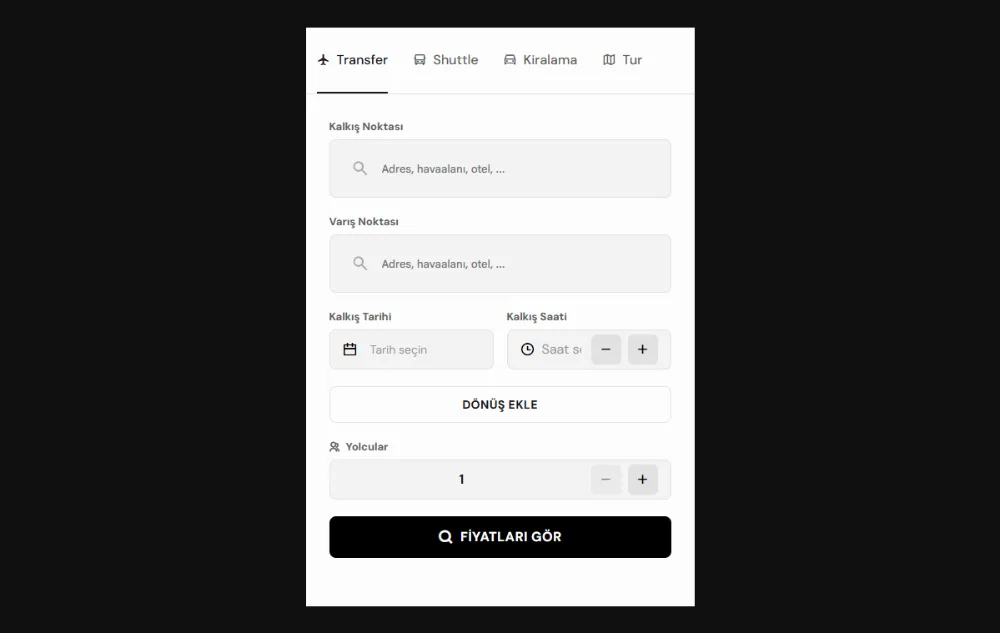
A transfer, tour or health tourism website needs a different workflow from a corporate website built to introduce a company: date selection, availability, currency, multiple languages and booking confirmation. Ask the agency for a project close to your sector that is live or described in detail.
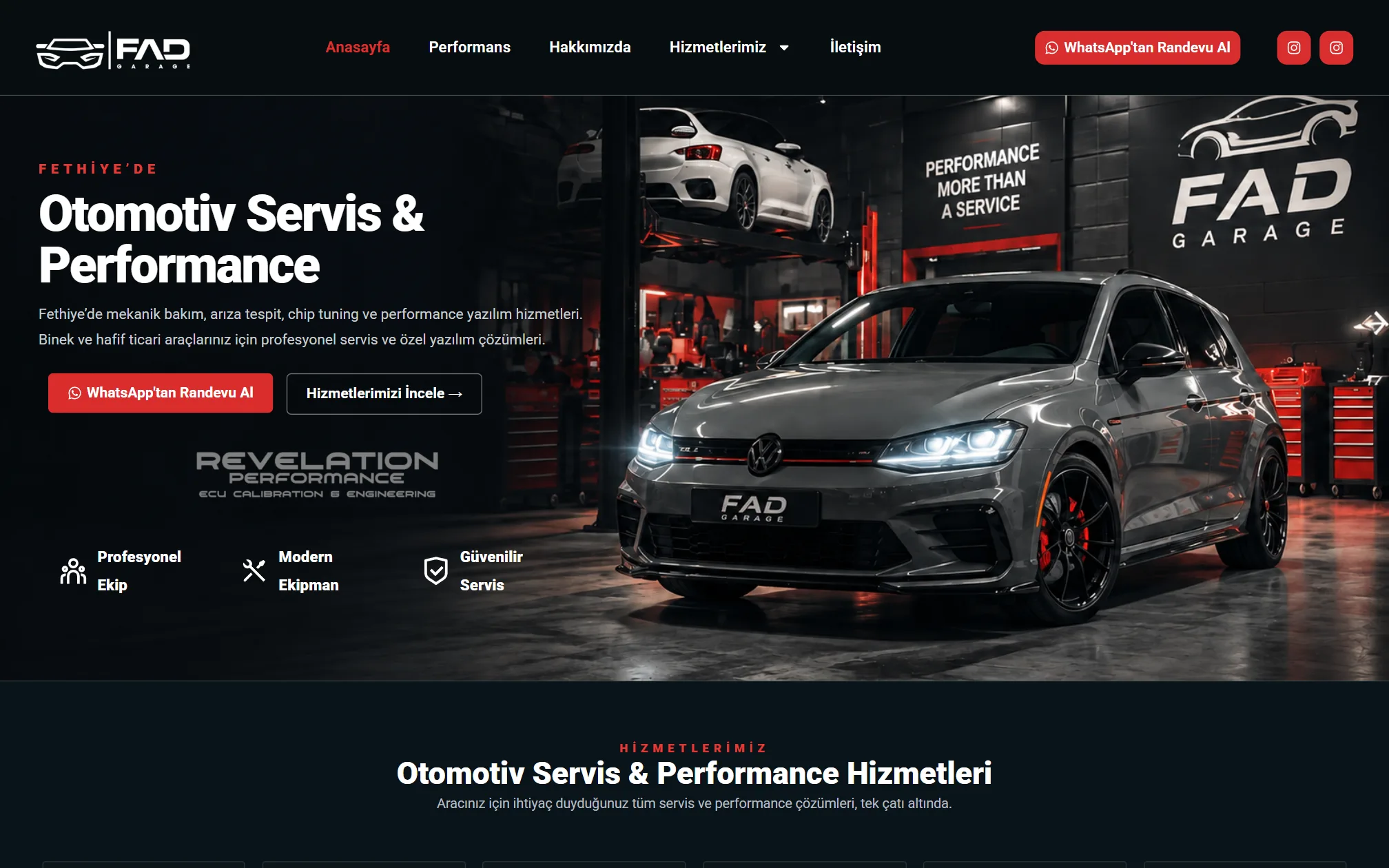
A references page should show not just a logo but the scope of the work: which screens were designed, which modules were developed, what the panel does. For example, in our Fad Garaj project for an automotive service and performance centre in Fethiye, we describe the scope step by step, from the website to the workshop board, and from the vehicle card to the stock and till screens. You can also look at our other work on our projects page.
A good answer: The agency shows you a live site, or a project with its screens and scope described in detail.
2. Who will do the work?
The person you meet and the person who does the work are not always the same. Ask whether the design, the software and the server setup will be done by the agency’s own team, or whether part of it will be outsourced.
When the work is spread across several companies, every change can turn into a separate conversation and every problem into a debate about responsibility. Find out from the start whether you will have a single contact throughout the project, and who that person is.
This question matters more in projects made up of several parts, such as a site, integrations and a panel. For Kefmann, which handles global supply and distribution in the chemicals sector, we built an end-to-end digital infrastructure that runs from a catalogue of 10,000+ products fed by supplier APIs to quotes, orders and international shipment tracking. We developed the corporate website, the supplier API integration, the CRM and the shipment tracking as one team. When the parts sit with one team, responsibility for the connections between them stays in one place too; if several companies will share the work, make clear in writing who will hold this responsibility.
A good answer: You are told by name who will work on design, software and servers and who your contact will be; if any part will be outsourced, this is stated clearly.
Ownership: domain, source code and scope
Among the things to watch for when choosing a web design company, ownership is the topic most often skipped. These three questions make clear what stays with you after delivery.
3. In whose name will the domain be registered?
The domain is your brand’s address on the internet and should be registered in your business’s name. A domain registered in the agency’s name can cause problems if you want to change agency later.
Ask in writing with which registrar and in whose name the domain will be registered, whether you will also have access to its control panel and who will keep track of renewal dates.
A good answer: The domain is registered in your business’s name, the access details are given to you and the renewal date is confirmed in writing.
4. Who will hold the source code and guest data?
In a website or booking system developed for you, the source code, the database and server access are the work itself. Check that the contract clearly states whether these are handed over to you on delivery.
If an off-the-shelf system will be used, the question changes: can you export your booking and guest data, and what happens to your data if you leave the system? We cover this difference in detail in our off-the-shelf or custom decision guide.
A good answer: The contract states clearly who will own the source code, the database and server access on delivery; with an off-the-shelf system, you are shown in which format the data can be exported.
5. How clear is the scope written in the quote?
When you compare quotes, look at the scope before the total price. The number of pages and languages, booking and payment modules, the admin panel, content entry, training and the delivery date should be written into the quote.
One-line items such as “corporate website” or “booking system” lead to disagreements later about what is included. Ask from the start how work outside the scope will be priced too.
A good answer: The quote lists the pages and modules one by one and states clearly the delivery date and how work outside the scope will be priced.
Technical: languages, maintenance, speed and SEO
Technical questions show whether the site will keep working properly after launch day. You do not need to be a developer to understand the answers; asking for a concrete example is enough.
6. Have you built a multilingual site with online booking before?
On a site that sells to foreign guests, each language needs to be published at its own address, prices need to be shown in the guest’s currency and the booking flow needs to work from start to finish in the chosen language. Ask the agency for an example that shows all three together.
We explain what a tourism website needs in our website guide for tourism businesses, and the transfer side in our article on transfer website features. You can use these articles as a checklist when you talk to an agency.
A good answer: The agency shows you a booking flow that works in at least two languages and explains with an example that the address, the price and the confirmation messages change when the language changes.
7. How will maintenance and security work after launch?
After the site goes live, software and server updates, backups, monitoring and SSL certificate renewals carry on. Ask who will do this work, how often, and whom you will contact if the site goes down.
To see what work maintenance can cover, take a look at our cloud, servers and maintenance service page. Whichever agency you work with, tie the maintenance scope to a written list.
A good answer: What maintenance includes is written as a list; where backups are kept and whom to contact in an emergency are clear.
8. Will the site load quickly on mobile?
Tourism guests often visit the site on their phone, on the road or at the hotel. Open the agency’s previous work on your phone and check for yourself how long the pages take to load and whether the forms are easy to fill in with a finger.
Google’s free PageSpeed Insights tool is a good start for measuring a page’s mobile speed. Do not make its result your only decision criterion, but ask the agency the reason for a very low score.
A good answer: The agency shows its previous work by opening it on a phone and explains in plain language the steps it takes for speed, such as image sizes and caching.
9. Are the SEO foundations included in the quote?
A unique title and description for every page, a sitemap, structured data, a clean address structure and a Google Search Console connection are part of basic SEO. Ask whether these are included in the quote.
Be wary of a quote that guarantees first place within a set time; the right question is whether the foundations are set up correctly from the start and how the results will be measured.
A good answer: The technical SEO items are written into the quote one by one, and you are told which tool will measure the results after launch.
Communication
The last question is about how you will work with the agency throughout the project.
10. Can we meet in person?
Some businesses want to hold some of their meetings face to face. If this matters to you, ask from the start where the office is and how the discovery and presentation meetings are held.
As important as the format of the meetings is getting regular updates throughout the project. Find out how often you will see progress, whom you will contact and through which channel when there is a problem, and how long the first reply will take.
A good answer: The format of meetings, how often you will see progress and the first reply time are agreed from the start; you are given a single point of contact.
Ask us these questions too when choosing a web agency in Antalya
You can use the questions most effectively in this order:
- Send the agencies you talk to the same short brief: your business, your target guests, the languages and modules you want.
- Send these 10 questions in writing and enter the answers in the same table.
- Open the sites shown as references on your phone and, if possible, talk to one of those businesses.
- Once the quotes cover the same scope, compare the price and the timeline.
You can ask us this list just as you ask every agency that sends you a quote, and ask for our answers in writing. Tuedion is the brand of Ege Bilgi Teknolojileri, founded in Aydın in 2010, and our office is in Antalya. You can get to know our team and our story on our about us page.
Our answers to the questions on the list are these:
- Who will do the work: We handle design, software, cloud and digital marketing under one roof, and take the project from start to finish with the same team. You have a single project manager as your contact.
- Domain, source code and accounts: When the project is delivered, we hand over access to the source code, the domain, the server and third-party accounts.
- Scope and price: We clarify the scope in the discovery call, then present a fixed-price quote.
- Timeline: The timeline depends on the project. A corporate website usually takes 3 to 6 weeks, and custom software projects take 2 to 6 months depending on their scope; we give a clear timeline after the discovery call.
- Maintenance: After launch, we take care of security updates, backups, monitoring and small improvements through a monthly maintenance plan.
- Communication: The same team and the same number for maintenance, updates and new needs. Our first reply comes within one business day.
In custom software projects, we split development into two-week cycles and share the working version with you in a test environment at the end of each cycle. We describe our corporate website, booking website and multilingual website work on our web design service in Antalya page.
Frequently asked questions
How do you compare quotes?
First bring the quotes to the same scope: check whether the number of pages and languages, the modules, the panel, content entry, training and the delivery date are written into every quote. Then gather yearly items such as maintenance, server and domain on a separate line. Price becomes a meaningful basis for comparison only when the scope is the same.
In whose name should the domain be?
The domain should be registered in your business’s name. The agency can take on its management, but you should be the registrant and have access to the domain’s control panel. That way your address stays with you when you change agency.
Is an agency from outside Antalya a problem?
Not in itself; you can work well remotely with video calls and links to a test environment. What matters is that the communication routine and the scope are clear from the start. Our own projects include businesses in Fethiye, Göcek, Marmaris, Istanbul, Aydın, Cyprus and Strasbourg in France.
Why is maintenance priced separately?
Building the site is a one-off job; maintenance is work that carries on every month after launch. Security updates, backups, monitoring, domain and SSL renewals and small fixes take regular effort. That is why maintenance is usually priced as a separate monthly or yearly item; what matters is that what it includes is written down.
Use these 10 questions as a checklist and compare the answers in writing. If you are planning a website or a booking system, let’s talk about your project; in the first meeting we will listen to what you need and clarify the scope together.